A short history of Pondicherry
Puducherry means “new town” in Tamil. Its story is much older than the French town by the sea, and most of its chapters can still be seen.
An ancient port
The Periplus of the Erythraean Sea names a market port called Poduke on this coast, identified with Arikamedu, south of the city. Excavations there found Roman amphorae, lamps and glass; the settlement dates from the 2nd century BCE to the 8th century CE. Its finds are in the Puducherry Museum.

Jayaseerlourdhuraj · CC BY-SA 3.0 HeritageArikamedu Archaeological Site
Ancient port and trading settlement at Kakkayanthope, about 4 km south of the city; finds from its excavations are in the Puducherry Museum.

Satdeep Gill · CC BY-SA 4.0 MuseumPuducherry Museum
Museum in a French-period building near Bharathi Park, with one of the largest collections of Chola bronzes and finds from the excavations at Arikamedu.
Tamil kingdoms
The region was ruled in turn by the Pallavas, the Cholas and the Pandyas, then by the Nayaks of Gingee under Vijayanagara and, from 1638, by the Sultan of Bijapur. Temples such as Thirukameeswarar at Villianur, with inscriptions of the 14th century, and the Manakula Vinayagar temple, older than the French settlement, belong to this long history.

Ssriram mt · CC BY-SA 4.0 TempleThirukameeswarar Temple, Villianur
Shiva temple at Villianur where Shiva is worshipped as Kameeswarar and Parvati as Kokilambigai; its two-acre complex has inscriptions from the 14th century.
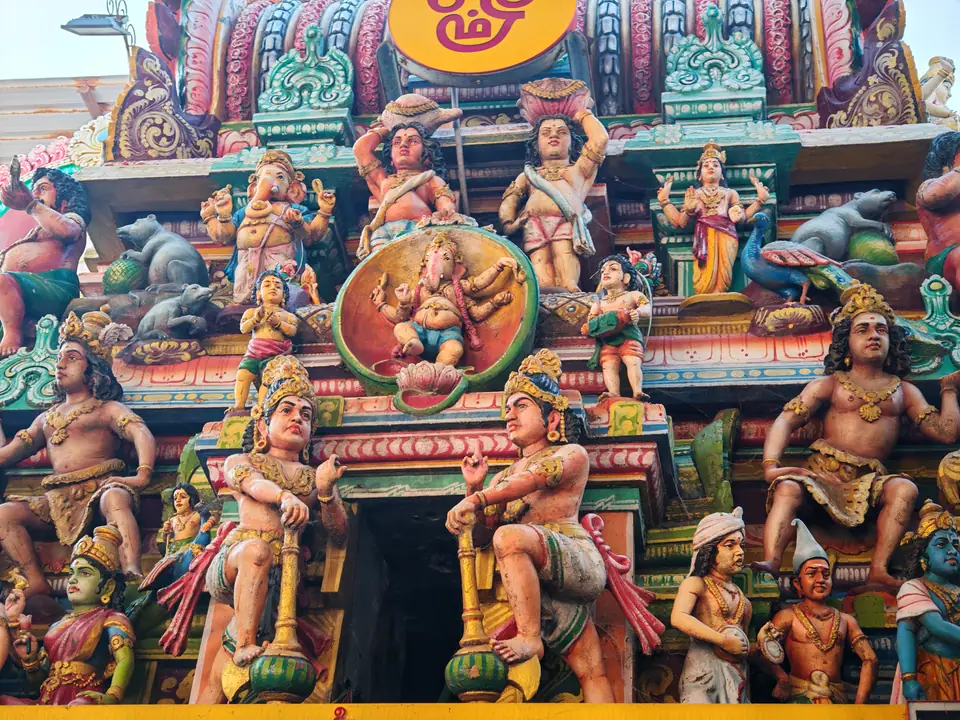
Deepak-nsk · CC0 TempleSri Manakula Vinayagar Temple
Ganesha temple in the old town, older than the French settlement and one of the best-known places of worship in Pondicherry.

Europeans on the coast and French Pondicherry
Portuguese traders came in 1521, followed by the Dutch and the Danes. French administration began on 4 February 1673, and François Martin, the first governor, turned a fishing village into a port. The Dutch held the town from 1693 to 1699. Under Dupleix (1742–1754) Pondicherry was the capital of French ambitions in India; the Meerapalli mosque, the cathedral’s third church and the first St. Andrew’s Church date from these decades. In 1748 the Vedapureeswarar temple was destroyed, as Ananda Ranga Pillai recorded in his diary.
- Mosque
Meeran Mosque (Meerapalli)
Sufi mosque built in the first quarter of the 18th century, the oldest standing mosque in Pondicherry, beside the grave of its founder, the Sufi saint Meeran Saheb.

BishkekRocks · CC BY-SA 3.0 ChurchImmaculate Conception Cathedral
Cathedral of the Roman Catholic Archdiocese of Pondicherry and Cuddalore, consecrated in 1791 and known locally as Samba Kovil.

Jayarathina · CC BY-SA 3.0 ChurchSt. Andrew’s Church, Reddiarpalayam
Church first built in 1745 by Kanakaraya Mudali, dubash of the French East India Company, whose tomb is inside; believed destroyed in 1761 and rebuilt in 1830.

Arunankapilan · CC BY-SA 3.0 TempleVedapureeswarar Temple (Easwaran Koil)
Shiva temple in the Tamil Quarter, destroyed in 1748 and rebuilt in 1788; with the Varadaraja Perumal temple close by, the nucleus around which the old town grew.
Destroyed and rebuilt
The British captured and razed the town in 1761. Returned to France in 1765, it was rebuilt by Governor Jean Law de Lauriston on its former plan, with the canal separating the French Quarter by the sea from the Indian Quarter inland. The cathedral was consecrated in 1791, the Governor’s palace (today’s Lok Niwas) rose again beside the park, and after 1816 the town remained French until 1954. The Old Lighthouse (1836), Our Lady of Angels (1855), Aayi Mandapam, the railway to Villupuram (1879), the Basilica of the Sacred Heart (1907) and the French War Memorial (1938) all belong to this period.
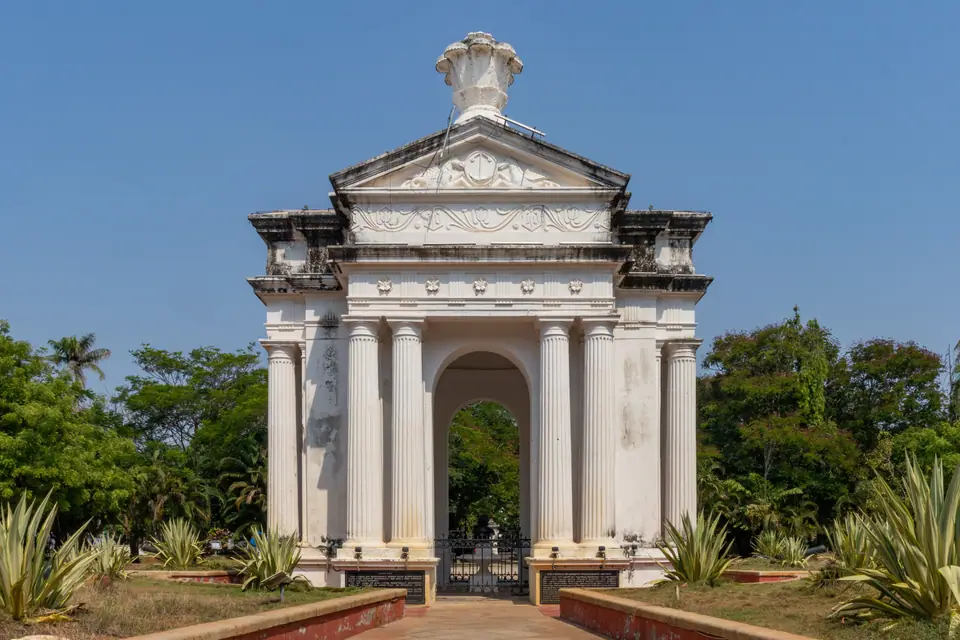
iMahesh · CC BY-SA 4.0 ParkBharathi Park
Shaded park at the centre of the French Quarter, beside Lok Niwas (Raj Nivas), with the white Aayi Mandapam monument in the middle.

Dr. Ajay B. MD · CC BY-SA 3.0 HeritageOld Lighthouse
The French lighthouse on the Promenade: a 29-metre tower first lit on 1 September 1836, replaced in 1979 by the new lighthouse to the south.

Aravindaraja · CC BY-SA 3.0 ChurchOur Lady of Angels Church
Église Notre-Dame-des-Anges on Dumas Street, built in 1855 in Greco-Roman style and facing the sea; mass is said here in French, Tamil and English.

BishkekRocks · CC BY-SA 3.0 Railway stationPuducherry Railway Station
The city’s railway station (code PDY) on Subbiah Salai, terminus of the branch line from Villupuram opened in 1879.
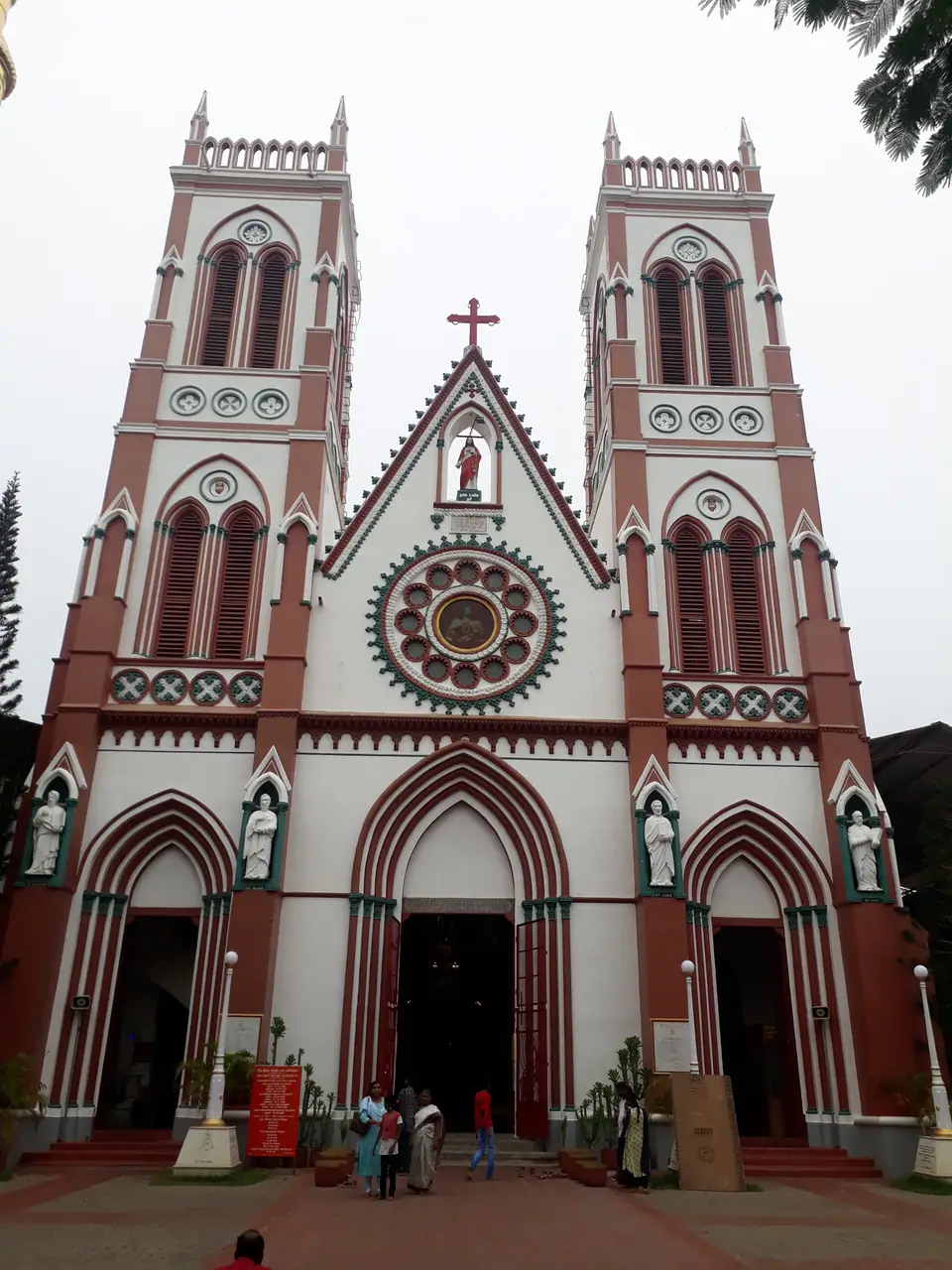
Pinakpani · CC BY-SA 4.0 ChurchBasilica of the Sacred Heart of Jesus
Gothic Revival basilica on the south boulevard, built from 1902 and known for its stained-glass panels of the life of Christ and the saints.
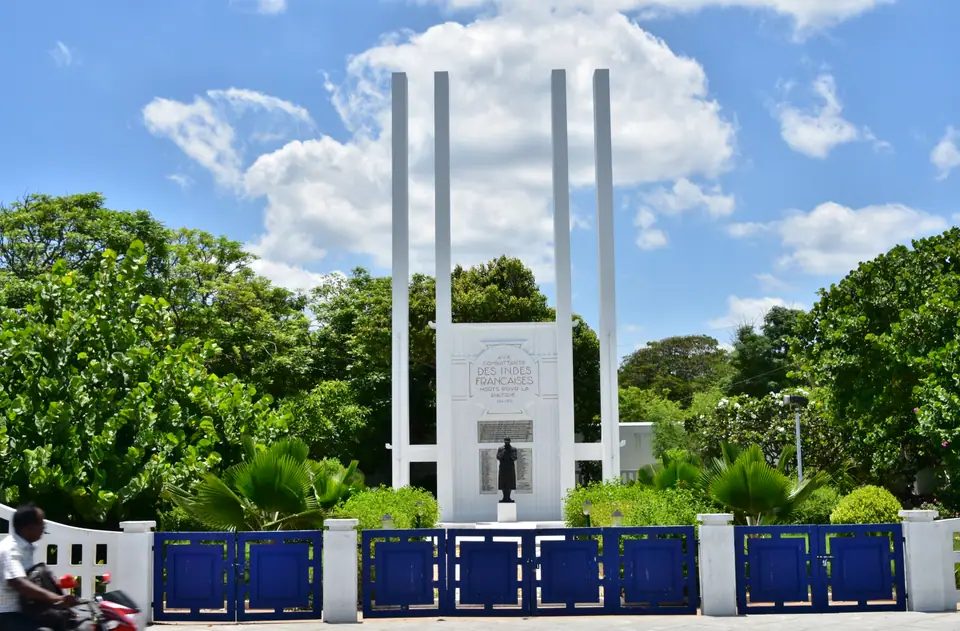
Richard Mortel · CC BY 2.0 MonumentFrench War Memorial
Memorial on Goubert Avenue to the people of French India who died in the First World War, inaugurated in 1938 and lit up every year on 14 July.


Poets, revolutionaries and the Ashram
French Pondicherry became a refuge from British India: the Tamil poet Subramania Bharathi lived here, as did Sri Aurobindo, who founded the Ashram with the Mother in 1926. The Ashram’s Golconde, completed in 1942, is counted the first modernist building in India.
- Museum
Subramania Bharathi Memorial Museum
House where the Tamil poet and freedom fighter Subramania Bharathi lived after taking refuge from the British in Pondicherry; now a museum of his works.
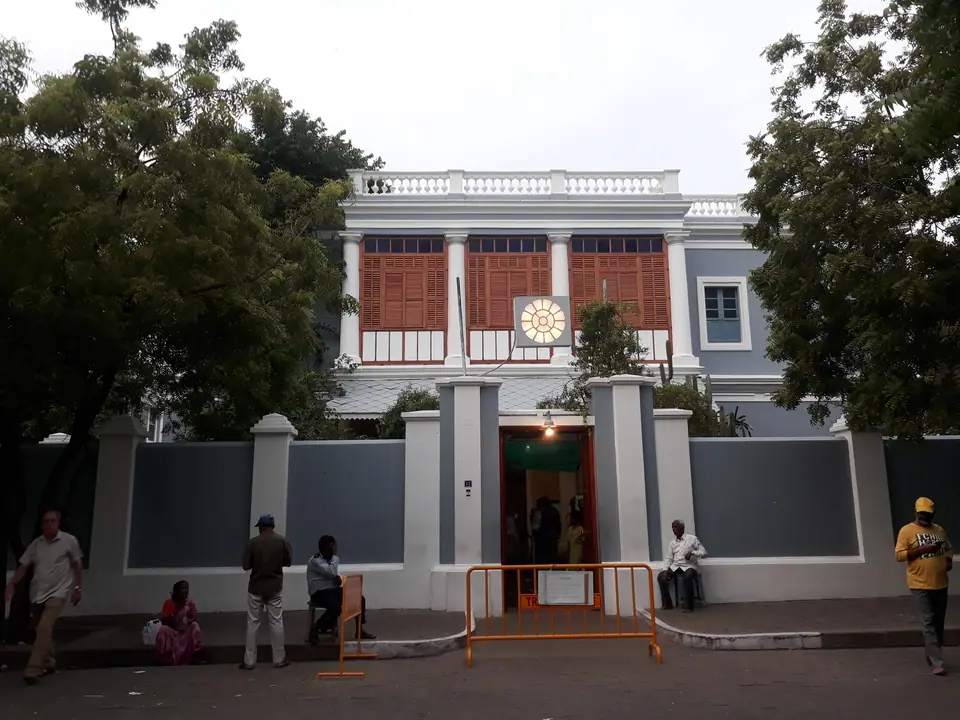
Pinakpani · CC BY-SA 4.0 AttractionSri Aurobindo Ashram
Spiritual community founded in 1926 by Sri Aurobindo and the Mother; the courtyard of its main building holds their samadhi.
- Heritage
Golconde
Residence of the Sri Aurobindo Ashram, completed in 1942 to designs by Antonin Raymond and George Nakashima and described as the first modernist building in India.

Since 1954
French rule ended with the de facto transfer to India in 1954; the Treaty of Cession was signed on 28 May 1956 and kept the French Institute, founded in 1955, as a research centre. Auroville was founded to the north in 1968, and its Matrimandir was completed in 2008.
- Heritage
French Institute of Pondicherry
French research institute founded in 1955 and kept by the 1956 Treaty of Cession, known for its Indology collections; on the Ashram heritage walk.
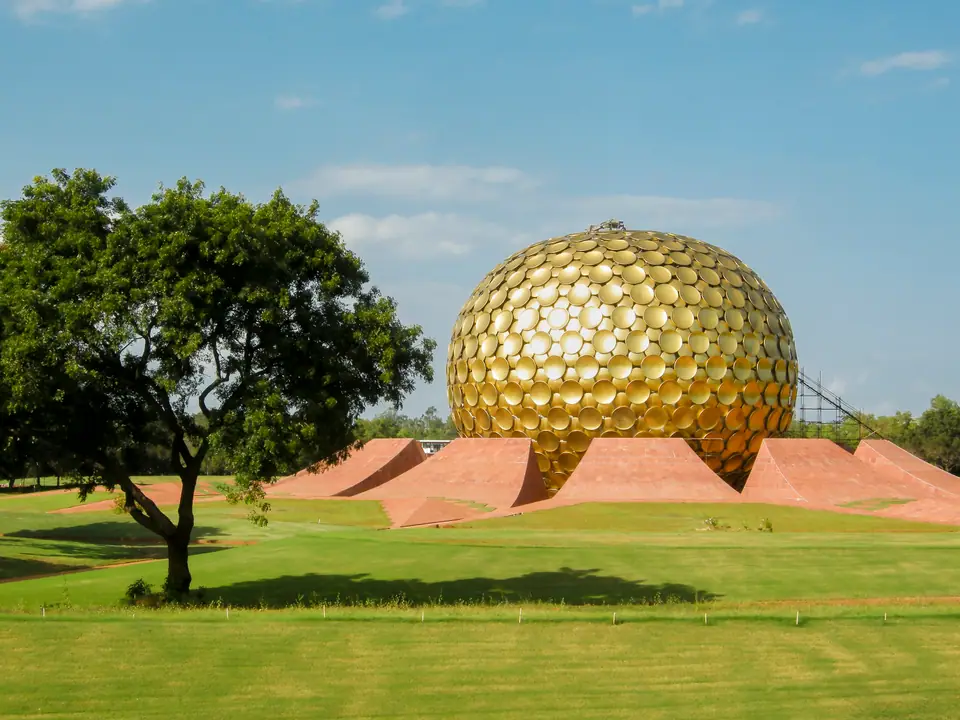
Matthew T Rader · CC BY-SA 4.0 Place of worshipMatrimandir, Auroville
The golden sphere at the centre of Auroville, conceived by the Mother as the “Soul of the City” and completed in 2008. In Tamil Nadu, north of Pondicherry.
In Tamil Nadu, outside the Union Territory of Puducherry
